Balancing Sticker Wall Art with Real Furniture Layouts at Home
Sticker wall art can look perfectly balanced on an empty wall and then feel wrong as soon as the sofa, bed or shelving goes back into place. The design may be centred on the wall but not on the furniture, too small to anchor the room, or partly hidden by curtains. Strong placement begins with the room as it is actually used, not with an empty-wall product mock-up.
At Stickers On Walls, we treat the wall as part of the furniture plan. A decal should support the main sightline, give large furniture a visual anchor and leave enough clear wall for the room to breathe. This guide explains how to match wall sticker designs to real sofas, beds, desks, cots, shelves and awkward spaces before anything is applied.
Start with the Room Plan, Not the Sticker Design
Before choosing a design, record the fixed facts of the room. A quick sketch and a few measurements prevent most placement mistakes. Note:
- The clear wall width and ceiling height
- The width and height of sofas, beds, desks, cots and sideboards
- Doors, wardrobes, windows, radiators, sockets and switches
- Where curtains sit when they are fully open
- The view from the doorway and from the seat or bed used most often
Next, identify the furniture group that should lead the wall. The largest wall is not always the best focal wall. A shorter wall behind the sofa may matter more than a wider wall hidden beside a wardrobe.
The main design often belongs:
- Behind the sofa, bed or sideboard that anchors the room
- Beside a reading chair, desk or dressing table that needs its own zone
- On the wall seen first when entering, provided it does not compete with another strong feature
Centre the design on the furniture group rather than automatically centring it on the full wall. This matters when a bed has been moved sideways to clear a wardrobe, or when a sofa sits off-centre because of a doorway. The furniture and the decal should read as one composition.
Mark the proposed outline with low-tack tape or paper, then check it from the doorway and your normal sitting position. For more ways to build a focal point without permanent decorating, see these feature wall ideas without paint.
Balancing Sticker Wall Art with Living Room Layouts
Most living rooms are read from the sofa first. Sit where you normally relax and look at the full view. The focal point may be the TV wall, a fireplace, a wide blank wall or the area behind the seating. Sticker placement should strengthen that view rather than create another competing centre of attention.
Use these proportions as a starting point, then adjust for the design itself:
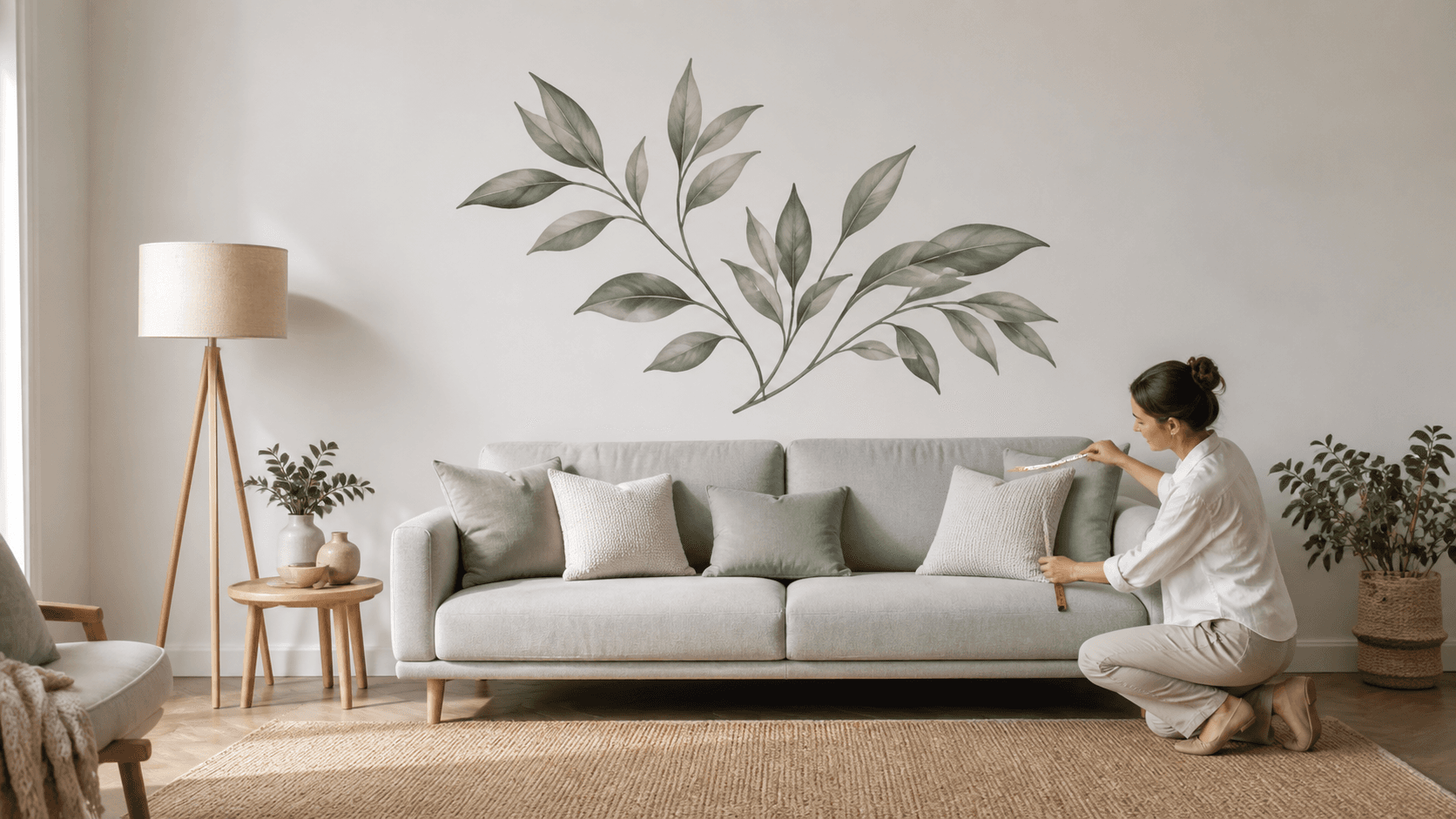
- A compact, solid design often feels balanced at roughly 60 to 75 percent of the sofa or sideboard width
- An open or scattered design can occupy a wider overall footprint because the gaps are part of the composition
- For a multi-piece decal, measure the complete arrangement, including planned spaces between the pieces
- Leave visible wall at both sides so the design does not look trapped between a corner and a curtain
For vertical placement, begin with a gap of roughly 15 to 25 cm above a sofa or sideboard. Then adjust for the height of the sofa back, seated headroom, cushions and the shape of the decal. A low, wide design usually feels more connected to furniture than the same design floating near the ceiling.
If the sofa sits in a corner, a perfectly symmetrical layout may feel forced. A branch, floral sweep or staggered cluster can start above the sofa and extend towards the open side of the wall. The visual weight should move into the room, not into the corner.
Around a TV unit:
- Keep highly detailed shapes away from the screen so the two do not compete
- Use simple side elements or a restrained frame rather than placing the busiest part directly behind the TV
- Keep cable routes, vents, wall lights and access panels clear
- Check where curtain stacks fall before fixing the final position
For more room-specific examples, compare the layouts in our guide to the best vinyl wall stickers for living rooms.
Using Wall Stickers Around Beds, Cots and Desks
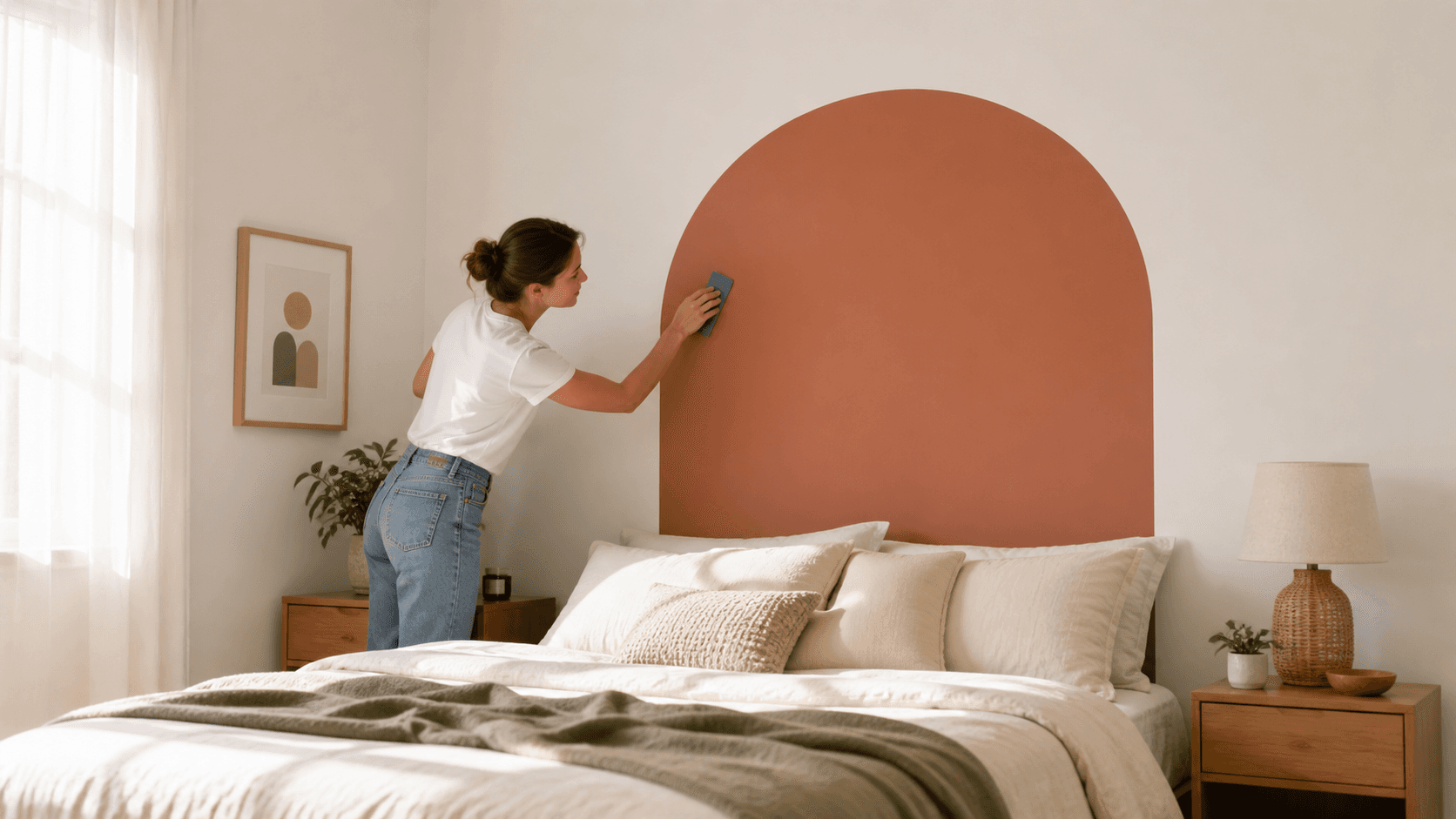
In a bedroom, the headboard wall is usually the clearest furniture anchor. Centre the decal on the bed or headboard, not on the wall, especially when the bed is shifted to make space for a wardrobe or bedside table.
For adult, teen and student bedrooms:
- Use a wide design above the bed to make the sleeping area feel grounded
- Treat 60 to 75 percent of the bed or headboard width as a useful starting range
- Leave enough space above pillows and a tall headboard so the lower details remain visible
- Use the wall opposite the bed for softer patterns or words you want to see when waking
When choosing bedroom wall stickers, compare the listed dimensions with the bed width rather than judging scale from the product image alone.
Nurseries and children's rooms need an extra practical check. Decorative stickers are not sleep-safety products, and separate pieces should remain outside a child's reach. Keep decals away from cot rails and places where a baby or toddler could pull at an edge. Apply only to sound paint, rub each piece down firmly and inspect the edges from time to time as the room changes.
The best nursery wall is not always directly behind the cot. A calm tree, cloud or animal scene beside a feeding chair, changing area or reading corner may be easier for both parent and child to enjoy without crowding the sleep zone.
For home offices and study areas, use the furniture to define the work zone:
- Place the strongest shape behind or beside the desk so the work area has a clear boundary
- Keep the wall immediately behind the monitor simpler to reduce visual competition
- Check the camera view if the wall will appear on video calls
- Use shelves, lamps and the desk edge as alignment points instead of centring everything on the wall
Kitchens, Hallways and Tricky Small Spaces
Kitchens and hallways often have narrow sections of usable wall between cupboards, tiles, doors, radiators and storage. These spaces work best when the sticker responds to the shape that is actually available.
In kitchens:
- Use small herb, coffee or quote decals near a breakfast area or open shelf
- Keep vinyl away from direct heat, heavy steam, grease and regular splash zones
- Avoid forcing a design across uneven grout lines or rough surfaces unless that product is made for them
- Allow cupboard doors, appliance doors and blinds to open without hiding the main detail
In hallways:
- Use vertical designs on narrow walls to reinforce height
- Align a decal with a console table, mirror or radiator cover so the group feels connected
- Keep busy details clear of coat hooks, key racks and door handles
- Choose a design that can be understood quickly as people move through the space
A compact room usually needs one clear feature rather than decoration on every wall. These small wall decor ideas show how to add interest without making the room feel crowded.
For alcoves, narrow returns and empty edges beside furniture, use corner wall sticker ideas rather than stretching a central design into a space it was not made to fit.
Choosing the Right Sticker Size, Colour and Finish
Size is not only about centimetres. Shape, contrast and detail all change how large a decal feels once it is on the wall.
Use these checks before choosing a size:
- Solid, dark or high-contrast shapes carry more visual weight and may work at a slightly smaller size
- Fine-line, pale or open designs often need a larger footprint to hold their place above substantial furniture
- Wide furniture usually suits a horizontal layout, while a narrow wall or tall cabinet can support a vertical design
- Include the gaps when measuring scattered stickers, repeated motifs or multi-part designs
Colour should connect the wall to the room without matching every item. Repeat one colour already found in a cushion, rug, curtain or piece of furniture, or choose a controlled contrast that gives the wall a clear job. Dark decals feel heavier on pale walls. Softer tonal colours create less contrast and often suit bedrooms, offices and smaller rooms.
Check the colour in daylight and with the lamps you normally use at night. A design that looks gentle beside a window can appear much stronger under warm evening light.
Matt vinyl usually blends more quietly with painted walls and reduces reflections from lamps or windows. Gloss finishes create a sharper, more reflective look, which can work for selected designs but may compete with a TV screen or bright window.
Surface condition matters as much as placement. Apply vinyl only to a smooth, clean, dry and sound surface. Fresh paint must be allowed to cure according to the paint manufacturer and sticker instructions, which can take several weeks. Test a discreet patch first when the paint type or condition is uncertain.
No removable product can guarantee the same result on every painted wall. Read do vinyl wall stickers damage walls before applying a large design, particularly in a rented home or on older paint.
If a standard size would clash with shelves, a headboard or an awkward wall return, a custom wall sticker can be produced around the available width and height instead of making the furniture fit the decal.
Quick Planning Checklist
Use this checklist before applying any wall sticker:
- Measure the clear wall area and the furniture below or beside it
- Choose the main sightline from the doorway, sofa, bed or desk
- Confirm the final positions of sofas, beds, shelves, curtains and storage
- Match the design orientation to the furniture and wall shape
- Calculate the full sticker footprint, including gaps between separate pieces
- Mark the width and height with low-tack tape or paper templates
- Check the outline while standing and from the position used most often
- Inspect the wall for dust, damp, texture, weak paint or uncured paint
- Apply slowly and use a second person for a large or multi-part design
- Check the edges and alignment before removing all application material
Your Next Step to Smarter Sticker Wall Art
The main shift is to treat the decal as part of the furniture composition, not as a last-minute extra. A layout is working when the sofa, bed or desk feels more grounded, the main sightline is clear and the wall does not compete with every other feature in the room.
Start with one room, one furniture anchor and one focal wall. Measure the actual space, mark the proposed footprint and live with the taped outline for a day. That simple test usually reveals whether the design is too small, too high or positioned around the wrong object.
At Stickers On Walls, our sizes, colour choices and custom options make it easier to choose around real rooms rather than idealised empty walls. Plan the furniture first, then select the decal that gives the layout the balance, direction or focal point it is missing.
Choose Sticker Wall Art That Fits the Furniture Below It
Before ordering, compare the sticker dimensions with the sofa, bed, desk or sideboard it will sit with. For a softer focal point above a bed or console, explore our sticker wall art and mark its listed size on the wall before choosing a colour.
A well-placed design should look connected to the furniture without being trapped by it. With accurate measurements, clear sightlines and enough breathing space, your wall can support the way the room is actually lived in, not just the way it looks in a product photograph.