How to Use Wall Sticker Designs to Improve Room Layout
If a room still feels cramped, flat or just "not quite right" after you move the sofa three times, the problem is usually not the furniture, it is the walls. Walls quietly control how a space feels, how you walk through it and where your eye goes first. When the walls are blank, or busy in the wrong places, the whole layout can feel off.
The right wall sticker layout ideas let you change that without knocking anything down. With well-placed graphics, your walls act like visual architecture. You can guide movement, mark zones and change how big or calm a room feels, all with removable wall sticker designs that suit rented homes as well as owned ones.
[Image: wall-sticker-layout-ideas-hero.jpg — ALT: Living room with a large tree wall sticker behind a grey sofa, showing how a feature wall anchors the furniture layout]
Quick Guide: Matching Sticker Layouts to Room Problems
| Room problem | Best sticker layout | Design examples |
|---|---|---|
| Low ceilings | Vertical designs that draw the eye upward | Tree wall stickers, tall botanical stems, panel-style decals |
| Narrow or short walls | Horizontal designs that stretch the eye sideways | Skyline decals, landscape scenes, simple stripes |
| No clear focal point | One bold anchor wall, other walls kept simple | Large floral wall stickers, statement murals |
| Open-plan room feels muddled | A distinct backdrop for each zone | Geometric wall stickers for work areas, soft florals for relaxing corners |
| Small room feels boxed in | Light, low-contrast design on one wall only | Delicate line art, pale botanical stickers |
| Busy family room or nursery | Gentle repeating patterns that calm the view | Scattered stars, dots, soft rainbows, nursery wall stickers |
How Wall Graphics Change Flow, Focus and Space
Every room has three layout forces at work, even if you have never named them:
- Flow: where you naturally walk
- Focus: where your eye lands first
- Perceived size: how big, open or busy the room feels
Wall stickers can shift all three.
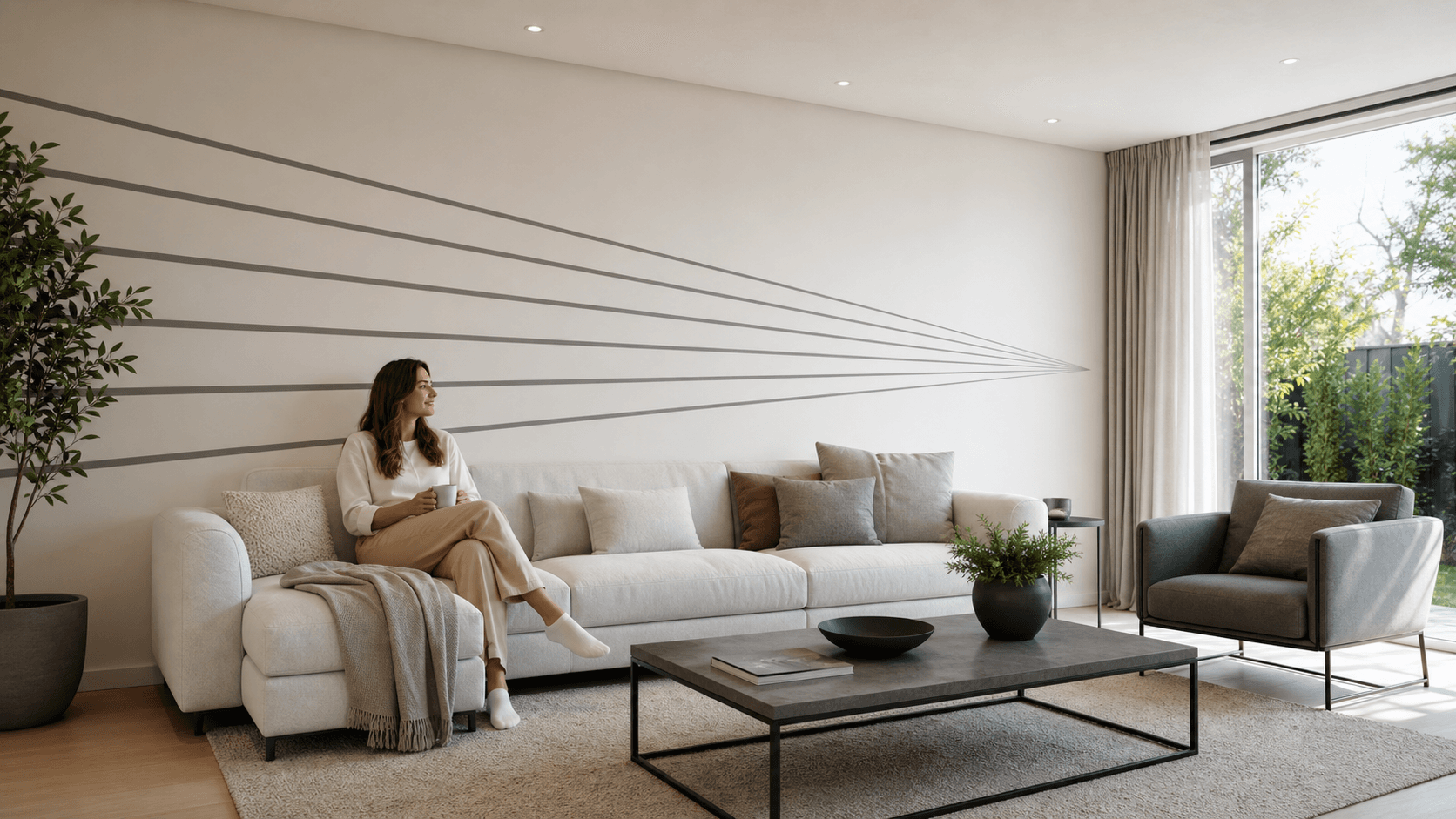
Vertical elements draw the eye upward. Tree wall stickers, tall botanical stems and panel-style designs can make low ceilings feel taller and help balance heavy furniture that sits low to the floor. Horizontal elements pull the eye sideways. Skyline decals or a landscape scene running along a wall can make a short wall feel longer and a narrow room feel wider.
Bold designs also create an anchor wall. Once you choose a main wall and place a strong design there, furniture tends to "click" into place:
- A sofa naturally sits under a wide skyline decal or oversized floral design
- A bed feels grounded with a soft scene centred above the headboard
- A desk gains importance when a geometric graphic sits directly behind it
Anchoring one main wall stops the eye from bouncing around every surface and gives the whole layout a clearer structure.
[Image: skyline-decal-narrow-living-room.jpg — ALT: Narrow living room made to feel wider by a horizontal city skyline decal running along the sofa wall]
Shop the look: For anchor walls, browse our floral wall stickers for softer schemes or skyline and cityscape decals for a modern, graphic feel.
Zoning Open-Plan and Multiuse Rooms
Open-plan and multiuse rooms are great until everyone tries to do everything in the same visual space. A living room that doubles as a work area, a kitchen-diner, a studio flat, or a teen bedroom with gaming and study zones can quickly feel messy and unfocused.
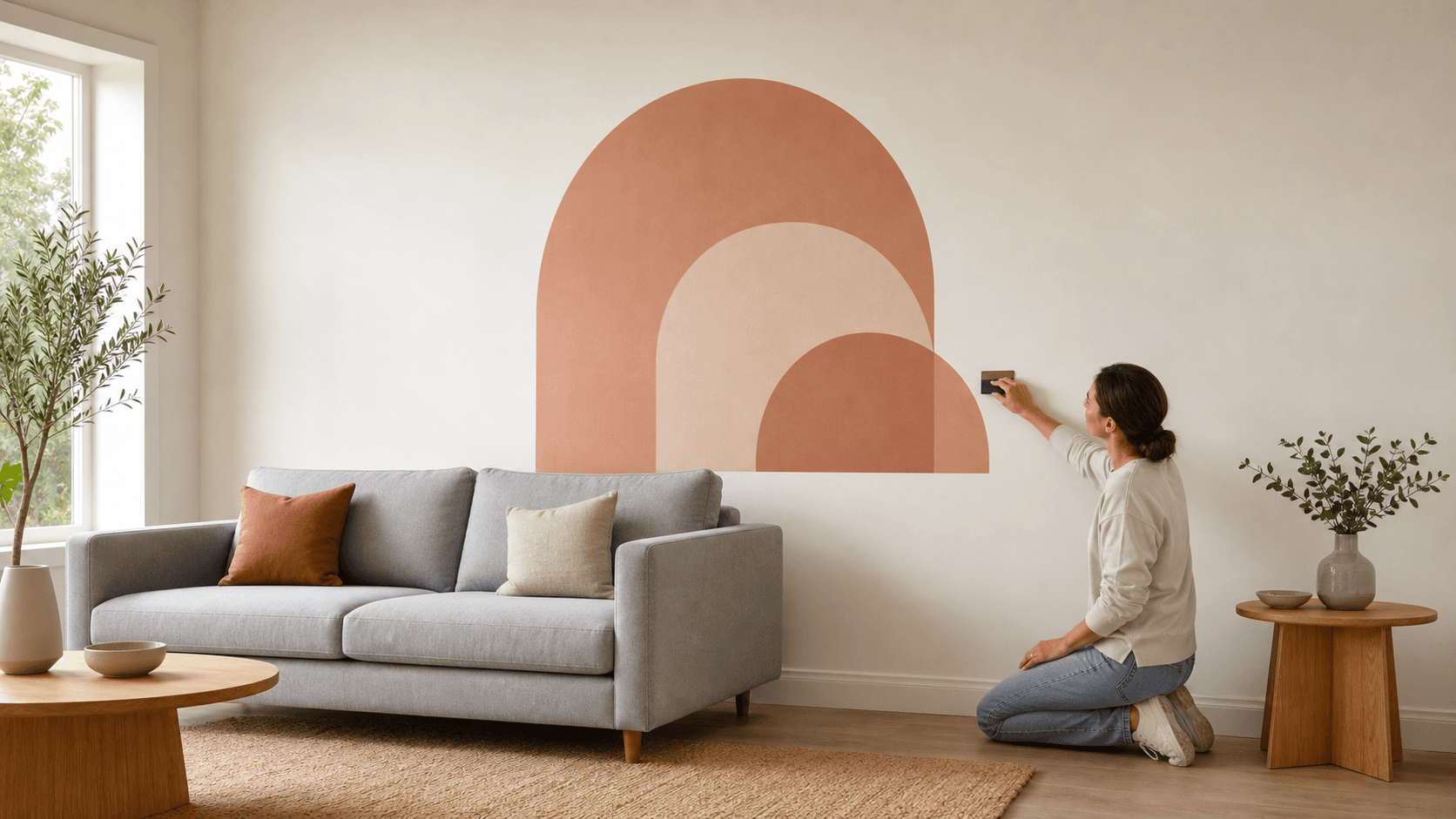
Wall stickers help by giving each zone its own backdrop. You are not building a wall, you are drawing a clear area for each activity.
Pair designs with how each zone should feel:
- Relaxing zones: floral wall stickers, flowing lines, clouds, leaves
- Focus zones: geometric wall stickers, grids, arches, clean stripes
- Eating and chatting areas: warm shapes, circles, or quote wall stickers with a welcoming phrase
Placement ideas:
- Behind a sofa to frame the "living" area in an open-plan room
- Behind or around a small desk to mark a work-from-home corner
- Around a dining nook, keeping the design above chair height so it feels open
- Leaving walkways and door areas simpler so the route stays visually clear
Clear visual areas for working, playing and relaxing help everyone switch tasks more easily, especially in busy family homes.
[Image: geometric-stickers-home-office-zone.jpg — ALT: Open-plan room with geometric wall stickers marking out a small home office corner behind a desk]
Shop the look: See our living room wall stickers for zoning open-plan spaces, or geometric ranges for study and work corners.
Making Small Rooms Feel Bigger
Small bedrooms, box rooms and student spaces often have one big piece of furniture that dominates the floor, usually a bed or a desk. If the walls are heavy or chaotic, the room can feel even smaller.
To open things up:
- Use vertical motifs, like slim tree wall stickers, behind the bed or desk to pull the eye upward
- Keep the other walls lighter or more minimal to avoid a boxed-in feel
- Choose light, low-contrast colours so the design and wall blend gently
When choosing sizes, think about distance and breathing space:
- A single large mural-style decal works well when you have one clear main wall and can stand back a few steps to see it fully
- A set of smaller stickers suits awkward walls, corners or the space around doors and wardrobes
- Leave a gap above headboards, door frames and skirting boards so the design does not feel squashed
Common mistakes to avoid in a tight room:
- Covering every wall in bold stickers, which can make the space feel busy and low
- Placing heavy, dark designs very low on the wall, which visually shortens it
- Mixing too many bright colours on all sides, which can feel restless, especially in a bedroom
Shop the look: Our bedroom wall stickers include light botanical and line-art designs sized for smaller rooms.
Calming Busy Family Rooms and Nurseries
Family rooms and nurseries gather a lot of stuff. Toys, books, baskets and furniture all compete for attention. Without some calm on the walls, the whole room can feel noisy before anyone even walks in.
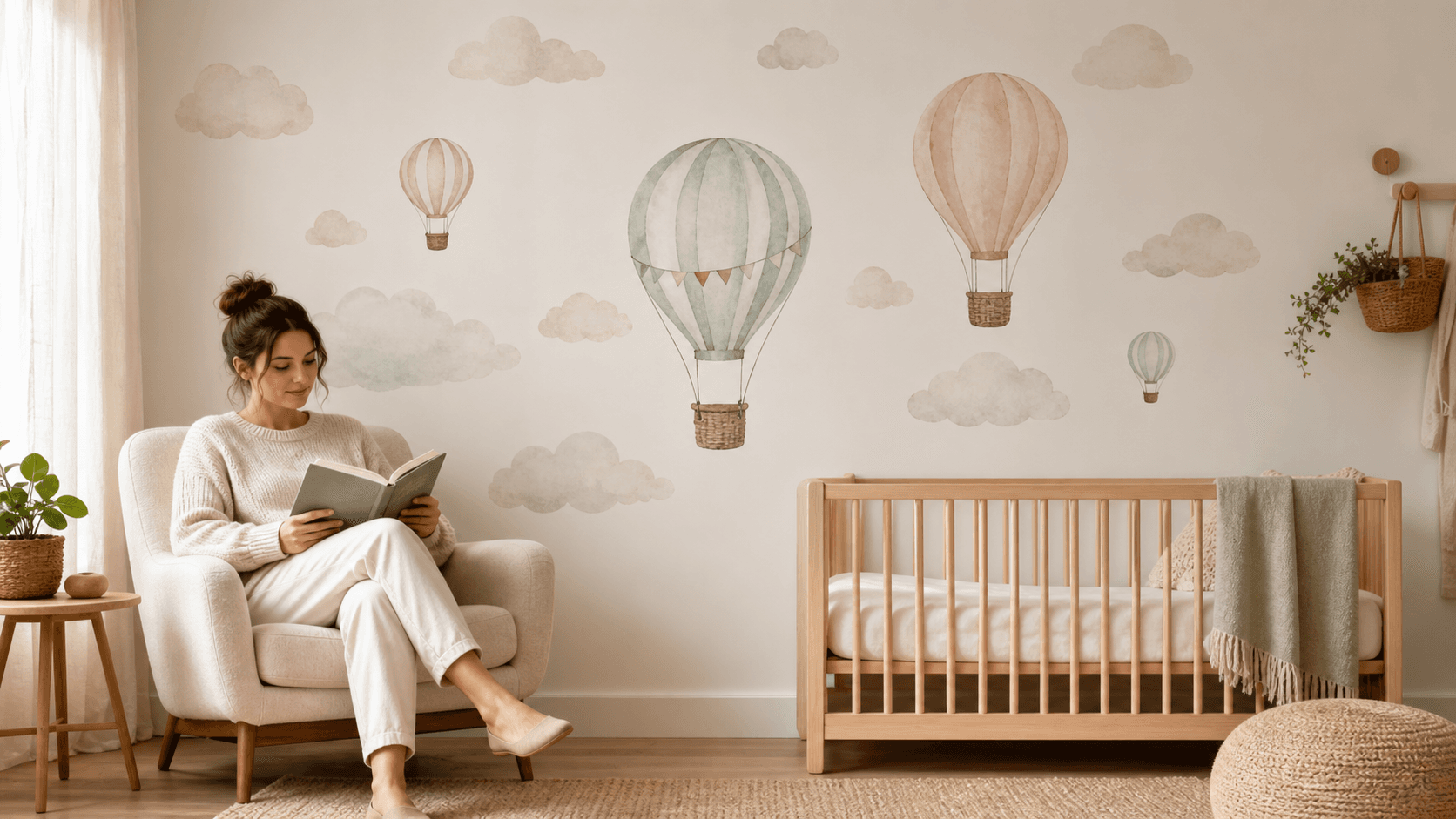
The right layout can create a soft backdrop that organises the view. Repeating patterns, like scattered stars, simple dots or gentle rainbows, give the eye a rhythm to follow, which feels more settled than random, bold shapes. Curved lines and rounded forms also feel kinder than sharp angles in spaces for young children.
Helpful layout tips:
- Put the most detailed scene on the wall you see first, often opposite the door or behind the cot or bed
- Keep the wall around the changing station simple so it does not feel overwhelming during busy moments
- Use softer, lighter designs near toy storage so the toys themselves stand out less
Safety and future-proofing matter here too:
- Place stickers out of reach of cots and very young children where possible
- Leave flexibility so furniture can move as children grow and needs change
- Choose themes that can grow from baby years towards school age, such as nature, simple shapes or skies, rather than very specific characters
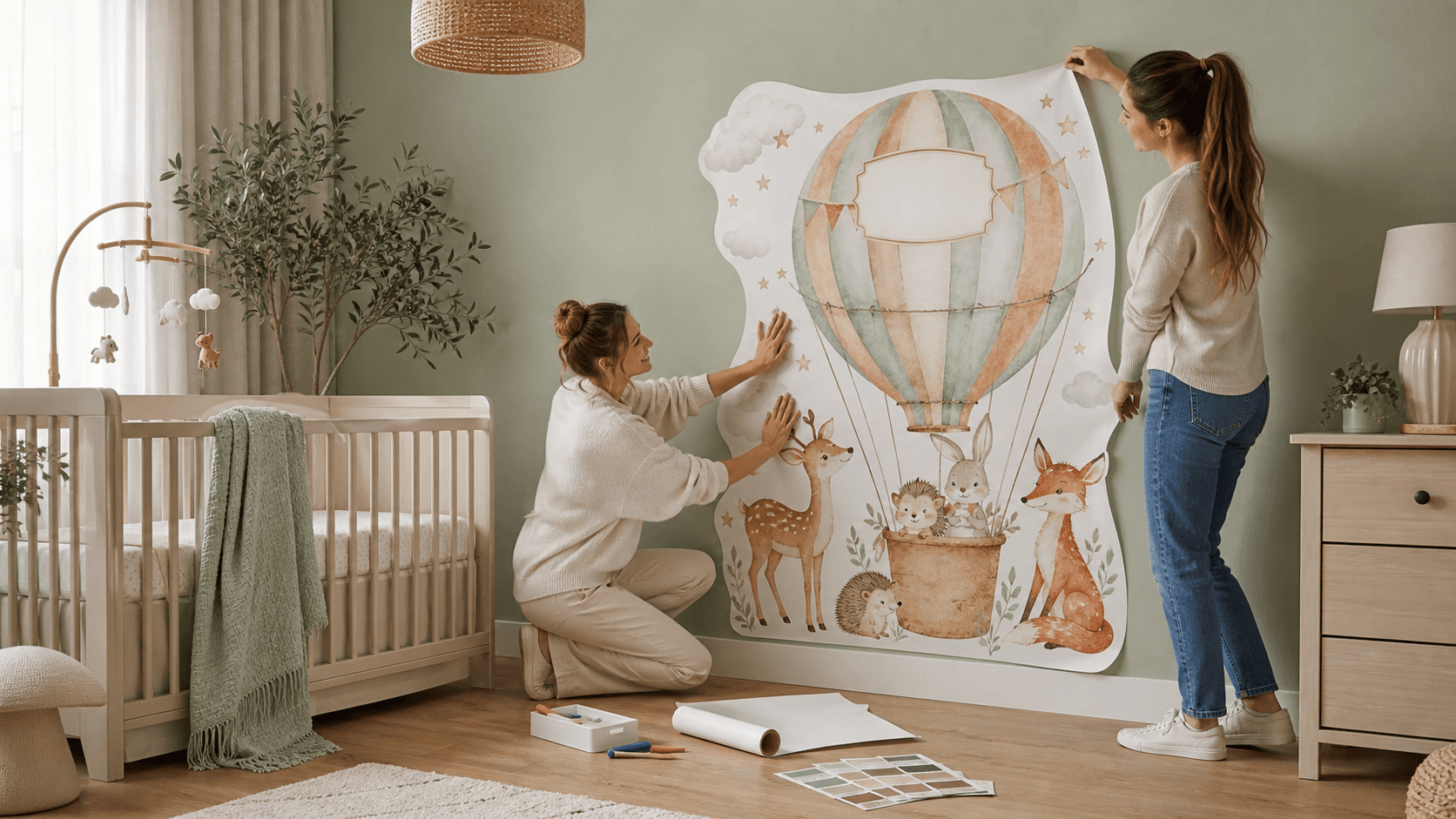
[Image: nursery-wall-stickers-star-pattern.jpg — ALT: Nursery with a soft repeating star wall sticker pattern above a cot, keeping the room calm and uncluttered]
Shop the look: Explore our nursery wall stickers for gentle repeating patterns and grow-with-them themes.
Practical Planning: Measuring, Surfaces and Installation
Good planning makes the whole process smoother, especially in UK homes where walls can vary a lot. Wall stickers are designed to stick best to smooth, clean and sound painted surfaces. If a wall has just been painted, it needs time to cure properly before stickers go on. In rented homes, or where you are unsure about the paint, it is always worth testing a small area first.
To match designs to your layout, work through this checklist:
- Map your layout and choose a main focal wall, usually the one you see first from the doorway
- Measure key furniture heights (sofas, desks, headboards) and the clear wall space above them
- Note fixed obstacles like radiators, sockets, and light switches before choosing a design size
- Shortlist sticker styles by function: calm, energise, zone or enlarge
- Check wall condition and try a small sample or discreet area first
- When removing later, peel slowly and carefully. Stickers are designed to remove cleanly from smooth, clean and sound painted walls when applied and removed correctly, but every surface can behave a little differently, so it is sensible to test a small area first
Quick Room Layout Checklist
Use this simple checklist before you buy or apply any wall stickers:
- What is the main job of this room (sleeping, working, playing, hosting)?
- Which wall do you see first when you enter?
- Where will the largest furniture pieces sit against the walls?
- Do you need to calm the room, energise it, or create clear zones?
- How far back can you stand to view a large design?
- Are your walls smooth, clean and in good condition, and have you tested a small area first?
Answering these points helps narrow your choices and avoids designs that fight against your layout.
Choosing the Right Design for Your Layout
Before falling in love with a specific design, start with how you need the room to work. Is this space mainly for sleeping, working, playing, hosting, or a mix of two or three? That answer should guide your choice more than any single pattern or colour.
From there, it helps to:
- Look at product photos that show rooms shaped a bit like yours
- Note where the stickers sit in relation to beds, sofas, desks and radiators
- Write down your wall measurements and layout goals, then compare two or three designs side by side
If nothing off the shelf fits an awkward wall or an unusual layout, custom wall stickers let you set the exact size, orientation and colours to suit the space.
At Stickers On Walls here in the UK, we focus on practical, design-led wall stickers that shape how a room feels, flows and functions. Whether you are working on a nursery, a living room, a bedroom or a home office, treating your walls as visual architecture makes every other choice easier and can help your layout finally feel balanced.
Give Your Layout the Wall It Has Been Missing
If a room in your home never quite settles, the answer may be one well-chosen wall. Measure your main walls, note where your key furniture sits, then explore our ranges by room type and style to find a design that supports how you actually use the space. From focal-point florals to zone-defining geometrics and made-to-measure custom designs, we will help you choose wall sticker designs that bring balance to the whole room, not just decoration to one corner.