Wall Sticker Layout Ideas That Make Every Room Work Harder
A room can still feel cramped, flat or slightly unbalanced even after the furniture has been moved several times. The problem is not always where the sofa, bed or desk sits. Sometimes the walls are leaving the room without a clear focal point or visual structure.
Walls influence where your eye lands, how furniture groups feel connected and whether different parts of a room appear organised or scattered. With the rightwall sticker designs, you can frame furniture, guide attention and define zones without repainting the room or committing to wallpaper. If you are starting with a large blank wall, thesefeature wall ideas without paint can also help you decide where a design will have the strongest effect.
The aim is not to fill every empty space. It is to choose a wall sticker layout that supports the way the room is used, fits the scale of the furniture and leaves enough blank wall for the design to breathe.
How Wall Stickers Affect Flow, Focus and Perceived Size
Good wall layouts begin with how the eye moves through a room, not simply with where the furniture sits.
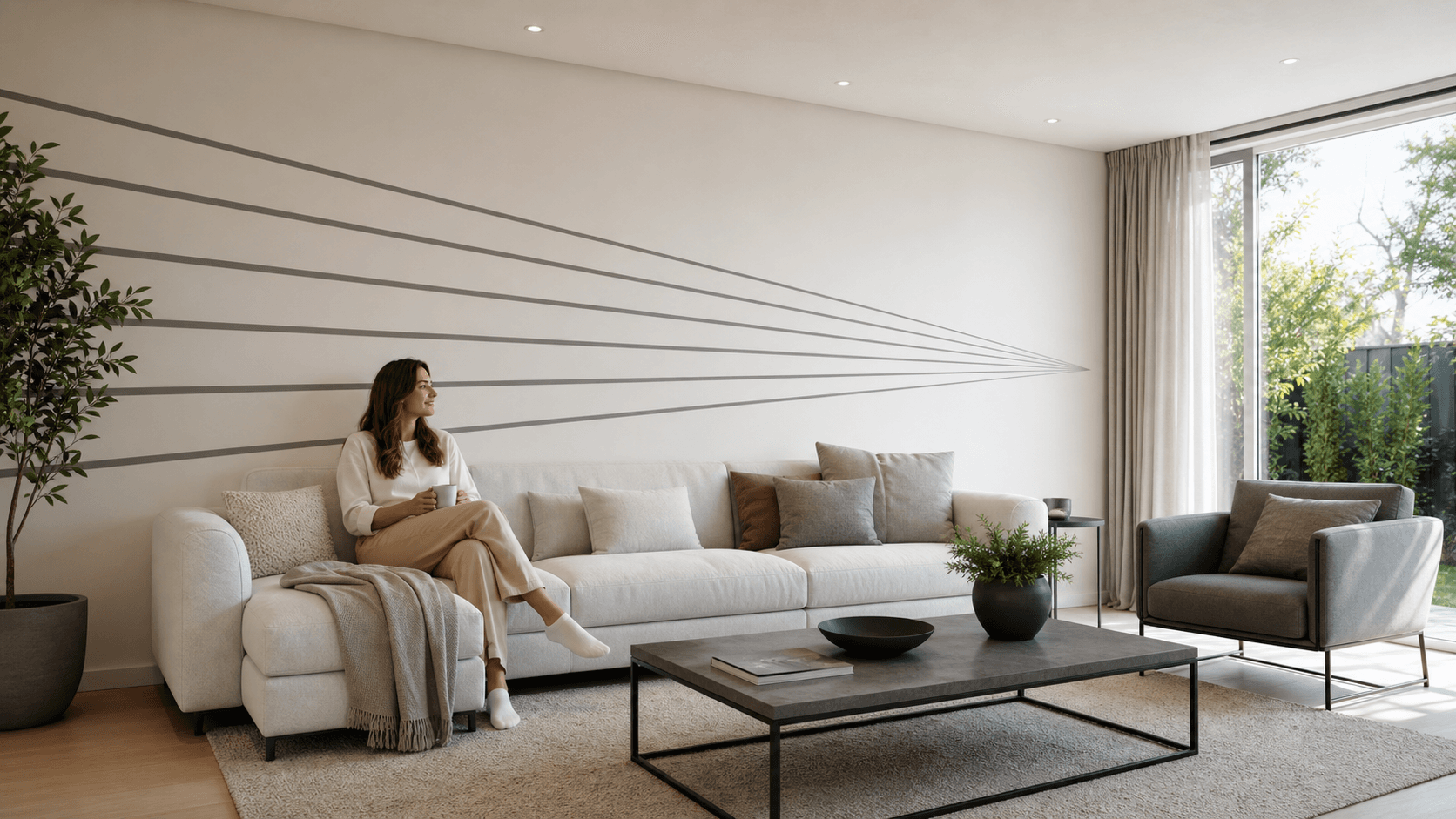
Flow is the visual route through the space. A wide skyline decal behind a sofa, for example, leads the eye across one clear line. This can make the arrangement feel more connected than several small, unrelated pieces spread around the room.
Focus gives the room a visual anchor. One considered feature wall helps a bed, sofa, desk or dining table feel intentionally placed rather than left against a blank surface.
Perceived size is influenced by the direction and visual weight of the design:
- Horizontal layouts, such as skyline decals, long quotes or geometric bands, lead the eye sideways and can make a short wall feel broader.
- Vertical layouts, such as tree wall stickers or tall botanical decals, draw attention upwards and can help a low wall feel taller.
- Open, scattered layouts can soften hard corners without making the wall feel solid or heavy.
- Large dark shapes carry more visual weight, while lighter colours and designs with open space usually feel less dominant.
Style also changes the mood. Floral wall stickers add softness and movement, while geometric decals create stronger structure. The best choice depends on whether the room needs to feel calmer, sharper, taller, wider or more clearly divided.
Wall Sticker Layout Ideas at a Glance
Start with the problem you are trying to solve. This makes it easier to choose a layout before becoming distracted by colours or themes.
| Room problem | Best wall sticker layout | Designs to consider |
|---|---|---|
| Boxy living room feels flat | One large focal design behind the main sofa | Skyline decals, oversized florals or a mandala |
| Long or narrow bedroom | A low, wide composition behind the headboard | Landscape layouts, floral branches or a geometric band |
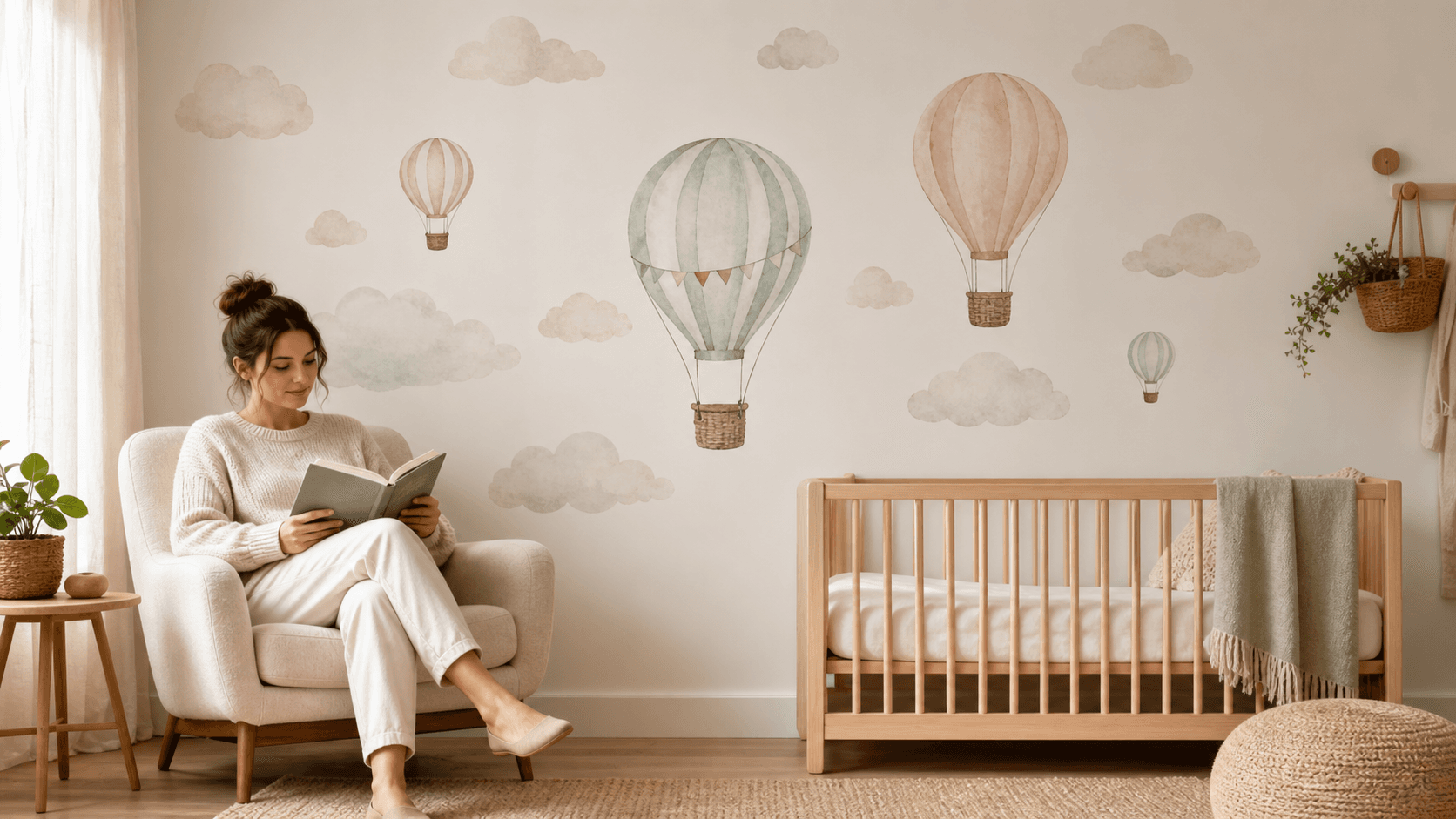
| Small nursery feels busy | One calm feature wall with low visual weight | Clouds, simple animals, trees or moon-and-stars designs |
| Open-plan room lacks clear zones | A separate backdrop for each main activity | Geometric arch by a desk, bold lounge graphic, small dining quote |
| Home office background looks untidy | A centred design kept within the desk zone | Subtle geometry, a compact quote or vertical botanicals |
Once you recognise the main problem, you can compare suitable sticker shapes and sizes instead of choosing a design first and forcing it into the wrong space.
Layout Ideas for Living Rooms, Bedrooms and Nurseries
Living rooms usually need one clear focal wall. This is often behind the main sofa, around a chimney breast or on the first wall seen from the doorway. The sticker should relate to the furniture rather than appearing to float above it.
- Use a wide skyline or botanical design above a low sofa, keeping the composition close to the width of the seating area.
- Create a smaller reading zone with a loose floral cluster behind an accent chair or floor lamp.
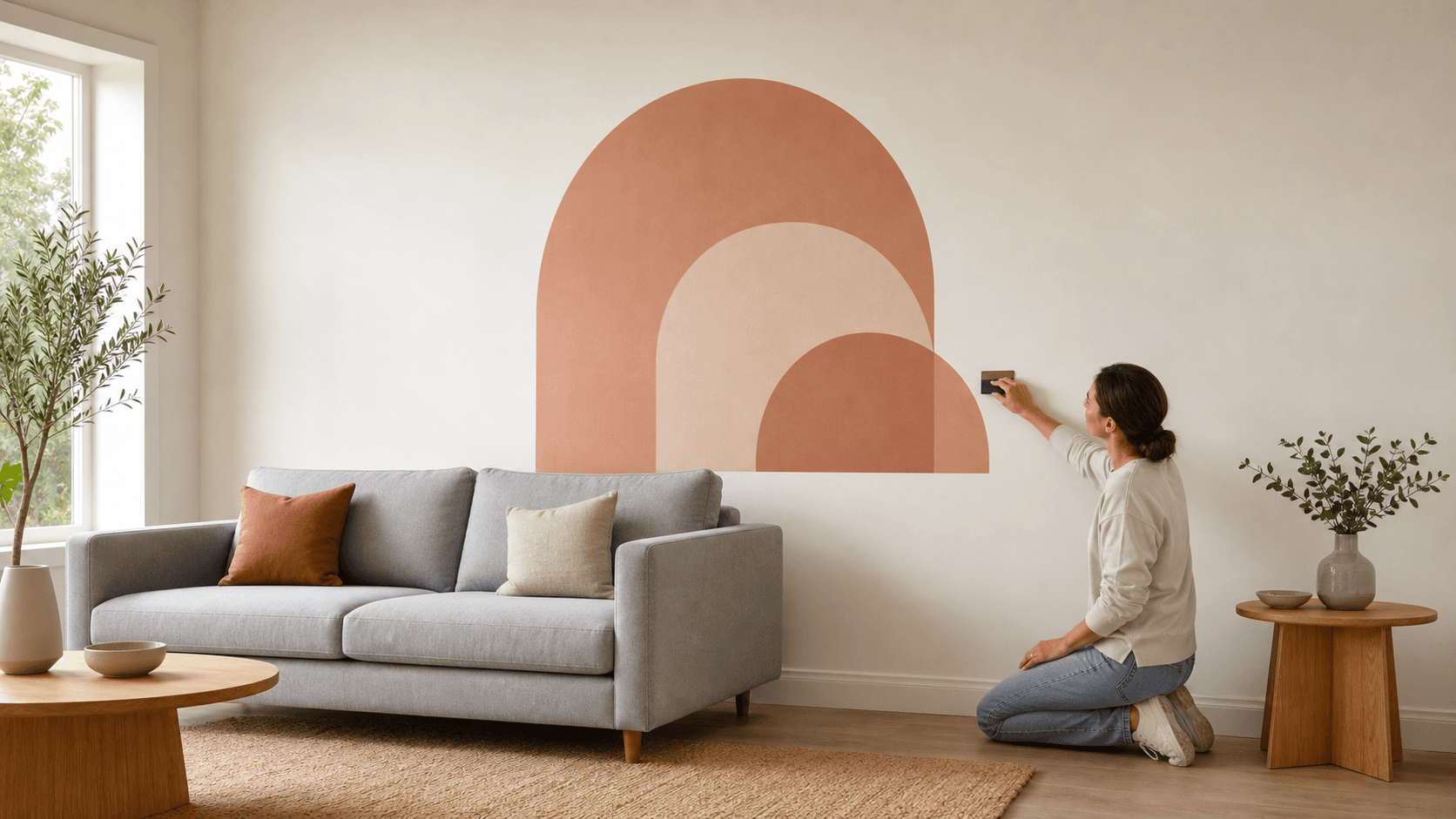
- Repeat a shape already present in the room, such as an arch, circle or angular coffee table, using a related geometric decal.
For more room-specific examples, read our guide to thebest vinyl wall stickers for living room before deciding on the size and position of the main design.
In a bedroom, the bed is normally the strongest visual anchor. The wall sticker should frame it without crowding the headboard, bedside lights or pillows.
- Choose a low, flowing floral design to soften the headboard wall.
- Use a horizontal geometric band to give a narrow room more visual width.
- Centre a quote above the bed and leave generous blank space around it.
- For an asymmetrical look, let a branch or floral corner design rise from one side of the bed rather than centring everything.
Browse ourbedroom wall stickers by shape and size as well as theme. A design that suits the width of the bed will usually look stronger than one chosen only because the artwork is attractive.
Nurseries and children's rooms need a quieter balance. Toys, bedding, books and storage already add colour and detail, so the wall design should organise the view rather than compete with it.
- Keep the cot or bed wall relatively calm with one simple scene or a few larger shapes.
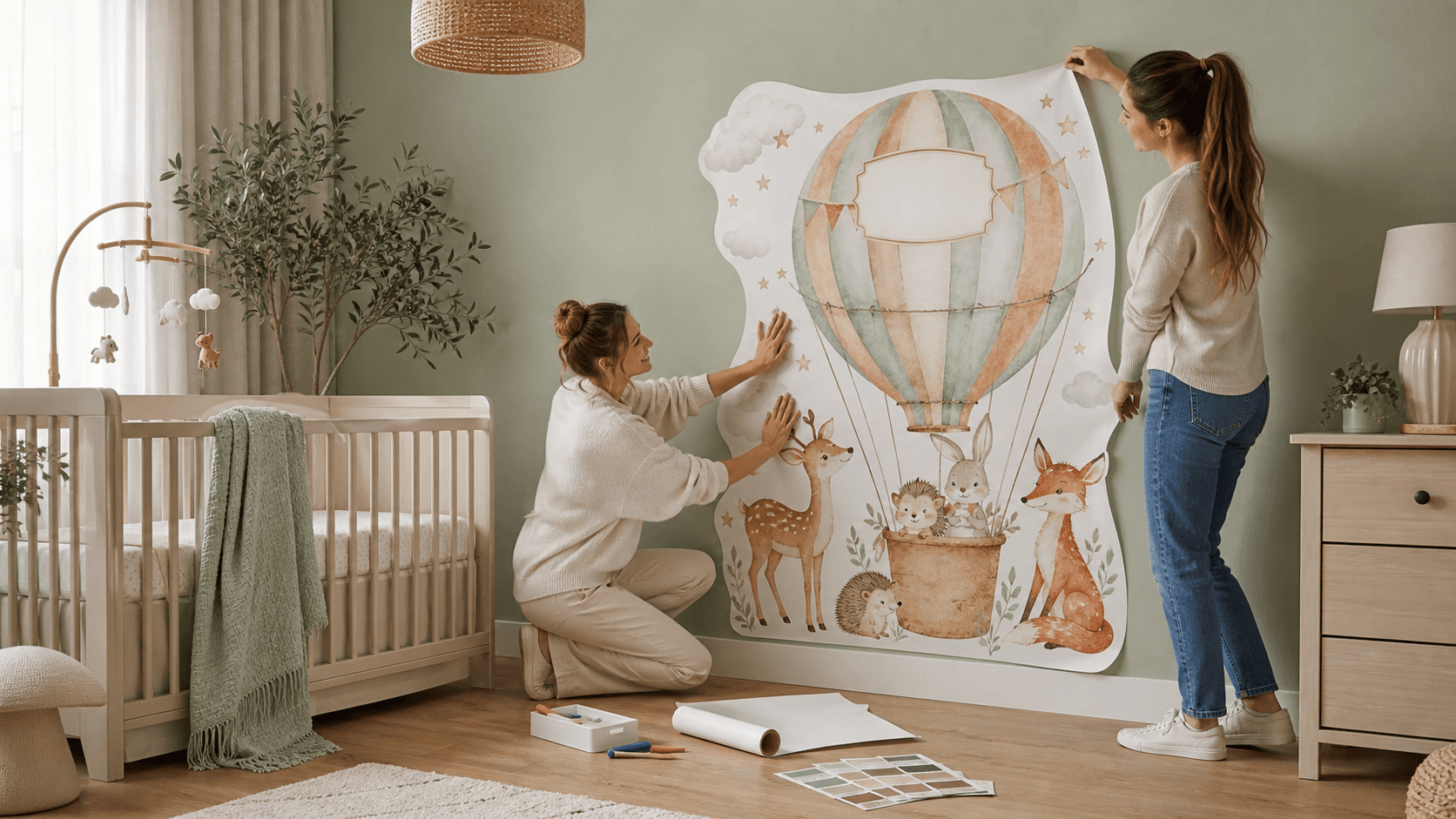
- Use a tree, woodland scene or animal group to frame a reading chair or book corner.
- Place smaller removable elements outside the reach of babies and very young children.
- Leave enough flexibility for the cot, bed, desk or storage to move as the child grows.
Small Rooms, Open-Plan Spaces and Home Offices
Small rooms benefit from restraint. When all four walls compete for attention, the room often feels more enclosed. One strong design with enough blank wall around it is normally more effective than several unrelated stickers.
- Use a vertical branch or tree to draw the eye upwards behind a desk or beside a wardrobe.
- Choose a wide, lighter design behind the main piece of furniture rather than filling every wall.
- Keep the entrance wall simpler so the route into the room feels visually open.
- Test the planned size with masking tape or paper before ordering.
Thesesmall wall decor ideas provide more ways to add interest without making a compact room feel crowded. Narrow alcoves, chimney-breast returns and unused corners can also become useful focal points with the rightcorner wall sticker ideas.
Open-plan rooms need visual boundaries. A living area, dining space and work corner can share the same colour palette while still having separate backdrops.
- Use a bold graphic behind the sofa to establish the lounge zone.
- Choose a smaller quote or warm circular motif near the dining table.
- Place a geometric arch or compact pattern directly behind a desk to mark the work area.
- Leave walkways, doors and narrow routes quieter so movement through the room remains clear.
A home-office backdrop should look intentional without becoming distracting. Keep the main design within the width of the desk or shelving so it reads as one defined zone, especially on video calls.
- Centre a geometric decal behind the monitor for a balanced background.
- Use slim vertical elements beside shelves to give a tucked-away desk more height.
- Choose simple lettering and limited detail for a cleaner, more professional look.
Planning and Installing Your Wall Sticker Layout
Good planning matters as much as the artwork. Begin by choosing the wall according to how the room is used and where your eye naturally lands when you enter.
- Stand in the doorway and identify the first wall you notice.
- Measure the full wall, the clear space above the furniture and the distance to the ceiling.
- Record the position of sockets, switches, shelves, radiators, curtains and opening doors.
- Mark the proposed width and height with low-tack tape, then view it from the doorway and the main seating or sleeping position.
- Check that the design remains visible when curtains, wardrobes and doors are open.
Avoid relying only on staged product photographs. Confirm the listed sticker dimensions and compare them with the real furniture in your room. A design that looks large on a screen may appear undersized above a wide sofa or king-size bed.
Surface preparation is equally important. Wall stickers generally perform best on smooth, clean, dry and sound painted walls. Loose paint, dust, grease, damp and heavy texture can affect adhesion. Fresh paint should be allowed to cure fully according to the paint manufacturer's instructions.
When the wall condition is uncertain, test a small, discreet area first. It is also worth reading our guide onhow to remove wall stickers safely before application so you understand how paint condition, preparation and removal technique can affect the result.
Wall stickers are designed to remove cleanly from suitable, sound painted walls when applied and removed correctly, but no result should be treated as guaranteed on every surface. During removal, work slowly from one corner and follow the instructions supplied with the product.
Bringing Your Room Layout Together with Intentional Walls
Thoughtful wall sticker layout ideas can solve problems that furniture alone cannot. A well-placed design can ground a sofa, frame a bed, bring height to a narrow corner or separate activities within an open-plan room.
Start with one problem room and one main wall. Decide whether the wall needs to create focus, add height, make the room feel wider, calm visual clutter or define a zone. Then compare designs by their shape, dimensions and visual weight.
This approach makes the final result feel like part of the room rather than an extra decoration added at the end. It also makes it easier to reject designs that look appealing online but do not suit the actual wall, furniture or viewing distance.
Create a Better-Balanced Room With Wall Stickers
A successful wall sticker layout should help the furniture, wall proportions and room zones work together. Measure the wall you see first, identify the job it needs to do and choose a design that fits the available space rather than fighting it.
Explore wall sticker designs by room, size and style, or choose one of ourcustom wall stickers when an awkward wall or specific layout needs a made-to-fit solution.